How Ayodhya’s Temple Tourism Is Expanding Property Demand Beyond the Main City
12 Jun 2026
Ayodhya, a sacred city for many Indians, is no longer limited only to darshan-led visits. The growth around Shri Ram Mandir is creating a new kind of tourism and a wider growth story in the city. Pilgrims, tourists, families, businesses and property buyers are all becoming part of this growth in Ayodhya.
As the temple’s influence grows, its impact is also moving across the rest of Ayodhya. Temple tourism is generating demand for roads, hotels, planned townships and short- and long-term real estate in Ayodhya and nearby areas. Although religion remains at the core of this growth, infrastructure development, hospitality demand, planned townships and real estate are also becoming important parts of the larger Ayodhya story.
Why Temple Tourism Is Changing Property Demand
The development around Shri Ram Mandir in Ayodhya has changed the destination from being mainly a place of pilgrimage to a year-round tourism centre. Tourist footfall in Ayodhya increased from 5.75 crore in 2023 to 16.44 crore in 2024, as per data released by the Uttar Pradesh Tourism Department [1].
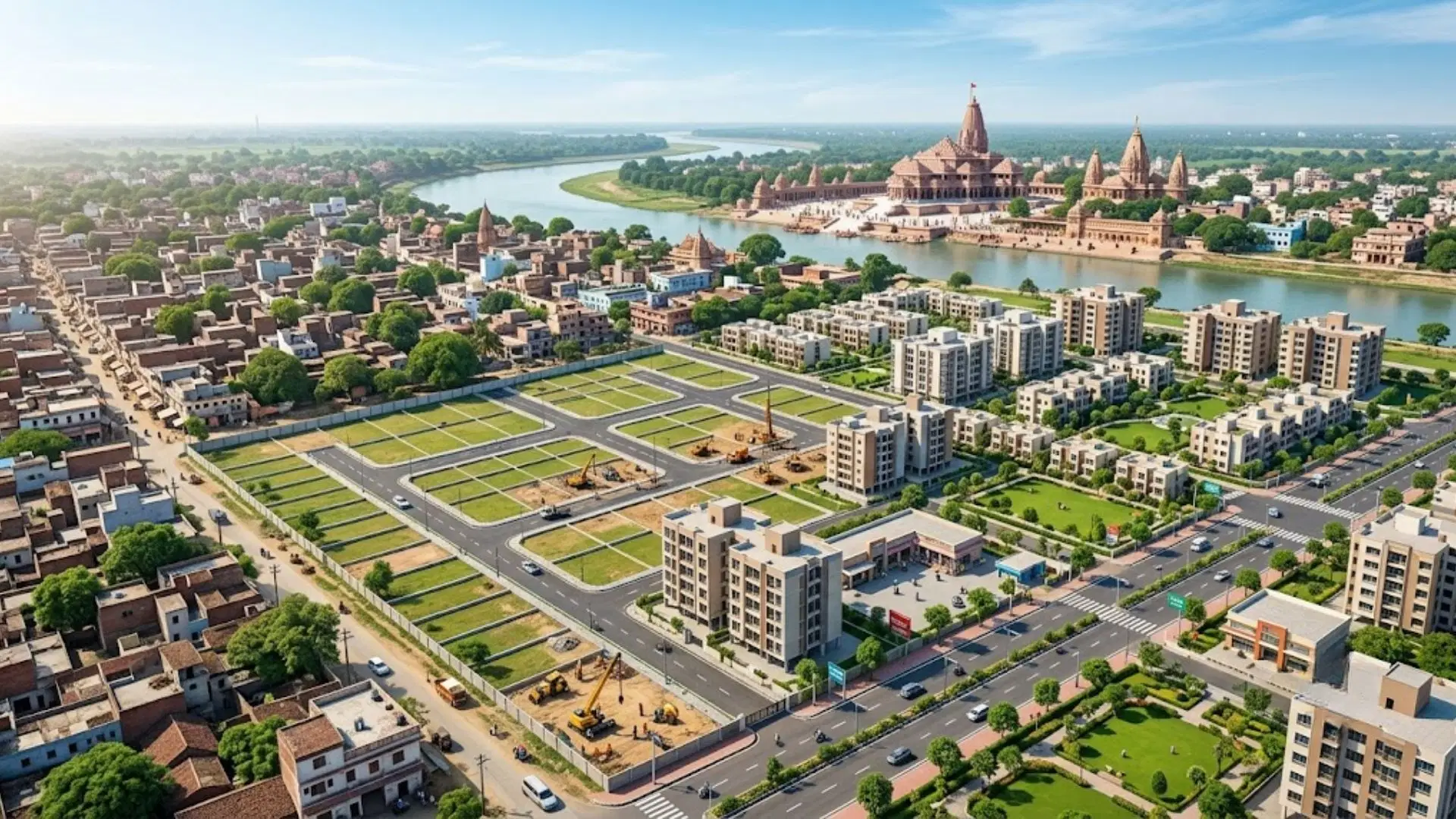
The demand for property is not confined to the city centre and is now expanding towards nearby areas. Support infrastructure such as roads, hotels, homestays, restaurants, parking spaces, transport and shopping outlets is being developed to cater to visitors as well as the local population.
Why Demand Is Moving Beyond the Core City
The temple area is the main point of interest in Ayodhya. Such areas are often part of the city’s heritage zones, with narrow streets, high footfall and limited scope for large-format development.
So, alternative locations outside the core city may offer more open space for planned development and long-term personal or family use.
As a result, buyers often start looking at areas that offer:
- Better road access
- More open land availability
- Lower congestion compared to the core city
- Scope for planned residential development
- Easier movement towards highways, airport and railway station
- Long-term usability for personal or family use
Infrastructure Is Supporting Wider Growth
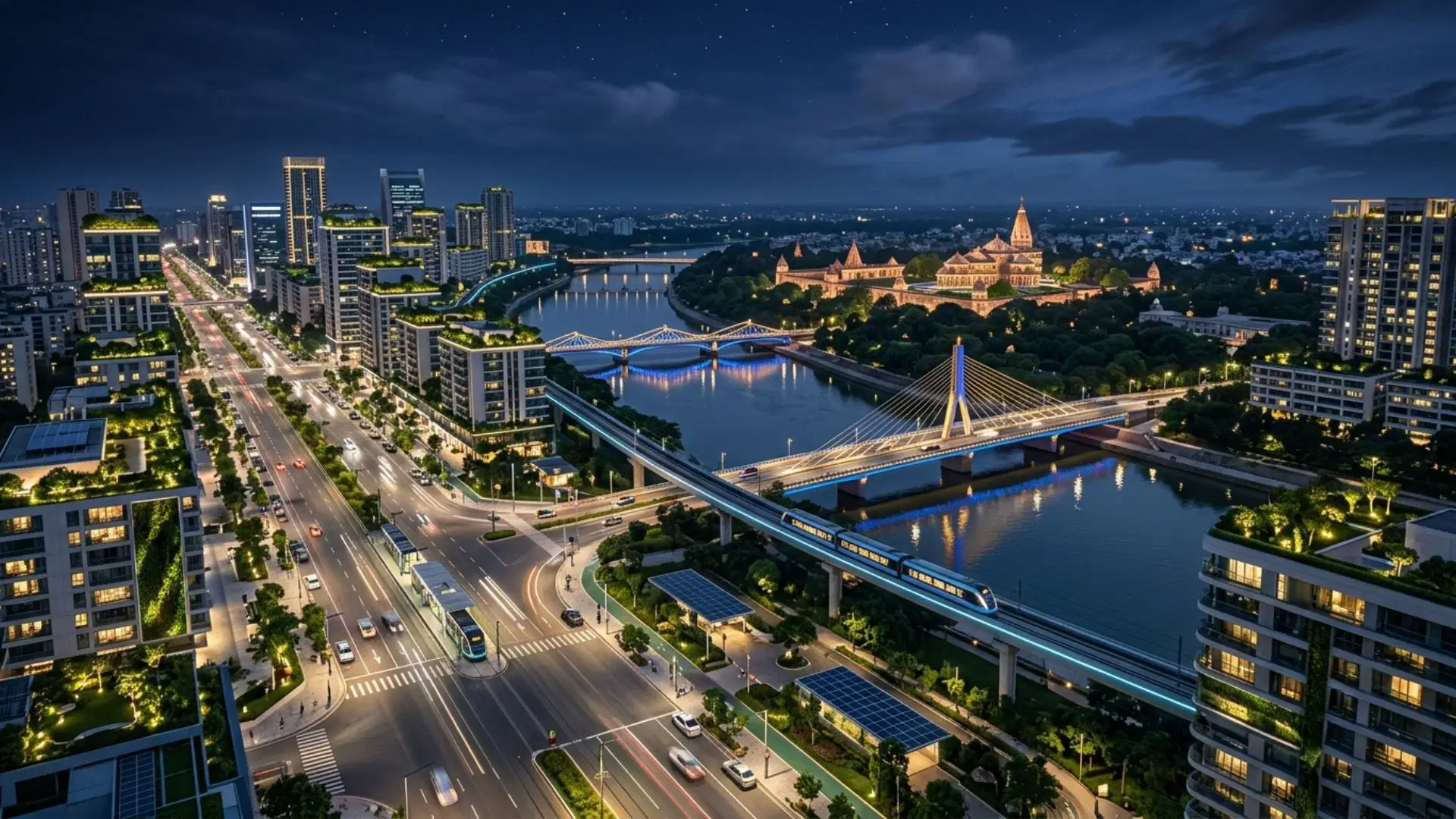
Growth in property interest outside the city of Ayodhya is increasingly being supported by infrastructure development. The Maharishi Valmiki International Airport was inaugurated in December 2023. In the first phase, the airport terminal, spread over 6,500 sq. m., has been designed to handle 10 lakh passengers per annum. Later, in Phase 2, it will be able to support 60 lakh passengers per annum [2].
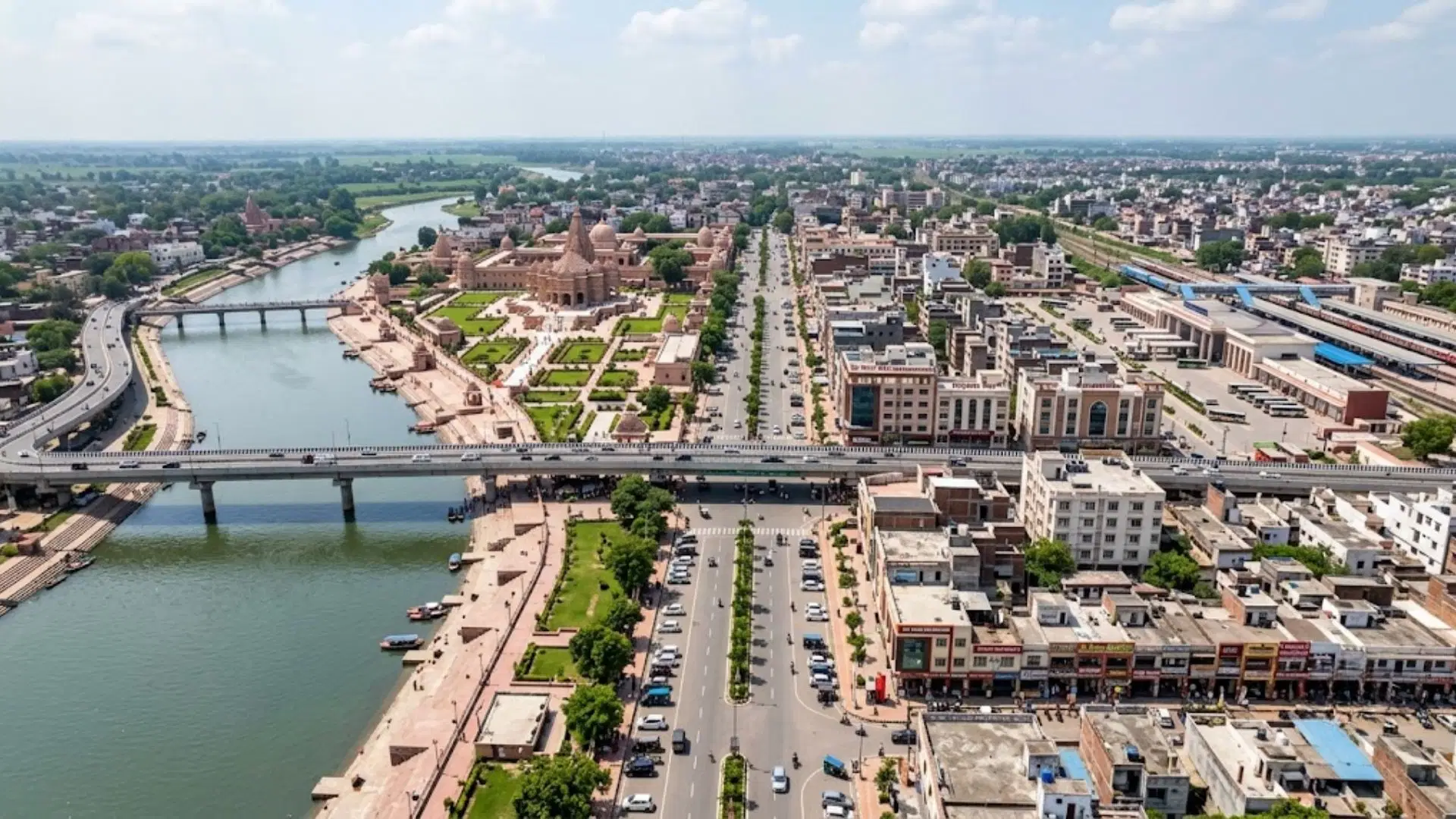
Railway connectivity has improved, and the Ayodhya Dham railway station has been redeveloped at a cost exceeding Rs. 240 crore [3]. The station has been designed with amenities such as lifts, escalators, food plazas, waiting halls and other passenger facilities.
Roads are also being redeveloped and widened to make movement easier for tourists and pilgrims visiting Ayodhya. Ram Path, Bhakti Path, Dharma Path and Shri Ram Janmabhoomi Path are some of the roads that have been redeveloped [4].
Many locations outside the crowded temple zone may also benefit from Ayodhya’s overall growth.
Hospitality Demand Is Also Influencing Property Interest
Temple tourism is also creating demand for accommodation in Ayodhya. Visitors coming for darshan, festivals, religious events and family trips need places to stay, which supports hotels, guest houses, homestays and short-stay accommodation.
Rental income is not guaranteed. However, stay-related demand in Ayodhya is increasing and becoming linked to real estate activity. A guide explains how accommodation demand in the temple town connects with property interest.
Planned Development Is Moving Outside the Temple Zone
As the city is getting more crowded, planned residential development is shifting to locations outside the immediate temple zone.
For buyers too, this development is relevant because demand for real estate is no longer confined to areas around the temple. Areas with major road connectivity, airport proximity, railway connectivity and scope for future infrastructure growth are becoming relevant for long-term land ownership.
In Ayodhya, planned land ownership is being shaped by branded plotted developments. The Sarayu by HoABL, is a plotted development where plots start from 116 sq. meters, or approx. 1,248 sq. ft., and come with 40+ amenities.
What Buyers Should Evaluate Before Choosing a Location
From a property buyer’s perspective, the question is not only whether Ayodhya is growing. What is important is where within the growth area of Ayodhya a particular property is located.
- Distance from the temple and key roads
- Access to the airport, railway station and highways
- Road width and approach road quality
- Nearby social infrastructure
- Zoning and land-use permissions
- Title clarity and ownership history
- Project approvals and layout details
- Long-term usability of the location
Various aspects need to be compared for all ayodhya plots available for sale, such as plot area, access to the plot, approvals required and granted, development of the surrounding area and long-term usability of the location.
Conclusion
Temple tourism is generating a new geography of demand for property in Ayodhya, and it is spreading beyond the main city area. This demand for property in Ayodhya is increasing due to visitor footfall, improved airport connectivity, upgraded railway stations, better roads, growth in the hospitality industry and planned residential development in the city.
As property demand in the larger Ayodhya area grows, there are more options available for buyers to choose from. However, buyers need to make a prudent decision after evaluating the location, proximity to amenities, approvals, legal status of the property and how useful the property will be in the future.
FAQs
Why is property demand increasing around Ayodhya?
The growing demand for property around Ayodhya is driven by temple tourism, improved connectivity, hospitality demand including hotels, and growth in infrastructure. The rise in visitor numbers to Ayodhya is also creating interest in areas outside the main city.
Are areas outside Ayodhya’s main city worth considering?
Yes, there are locations outside the city that buyers can consider. A lot would depend on how well these places are connected to the city by road, whether planned development is taking place, whether required approvals are in place, and whether the location can be used in the long run. Measuring distance from Ram Mandir alone would not be the right parameter to identify a suitable location.
What should buyers check before buying land near Ayodhya?
It is important to check a number of factors before buying land near Ayodhya. Buyers should verify the title to the land and the full ownership history. They should also check the condition of the access road to the property, local zoning, land-use regulations, approved development layouts and required infrastructure near the site. Lastly, it is important to establish the practical use of the land.
Sources -
https://invest.up.gov.in/wp-content/uploads/2025/01/4-Ayodhya_280125.pdf
https://www.pib.gov.in/PressReleaseIframePage.aspx?PRID=1991757®=48&lang=2
https://www.pib.gov.in/PressReleasePage.aspx?PRID=1997737®=48&lang=2
https://www.pib.gov.in/PressReleasePage.aspx?PRID=1991781®=48&lang=2